Swing Trading vs Day Trading in Crypto
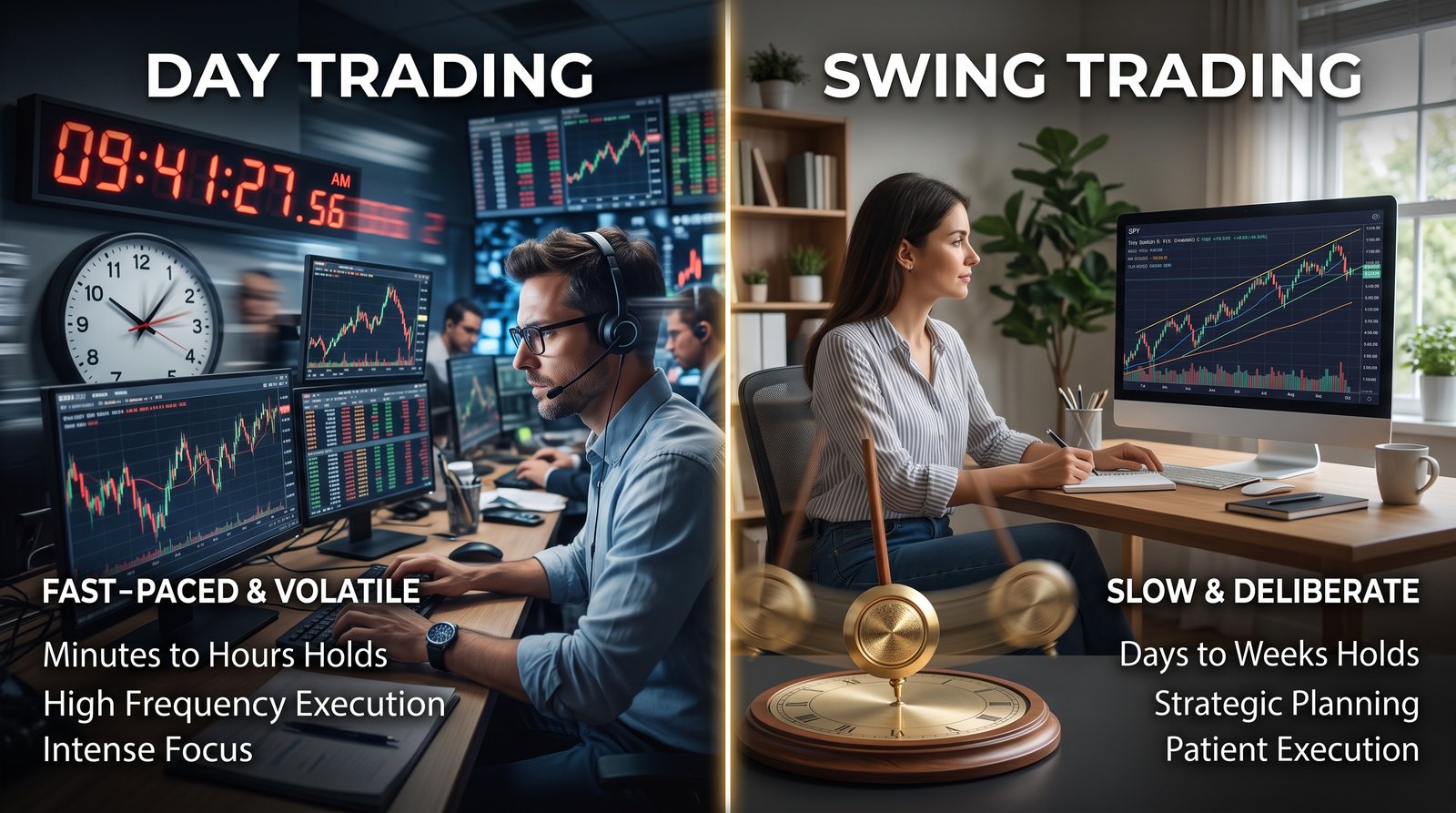
One of the first decisions every crypto trader must make is choosing a trading style. Swing trading and day trading are two of the most popular approaches, each with distinct characteristics, advantages, and challenges. Understanding the differences between these styles — and which one suits your personality, schedule, and goals — is essential for long-term trading success.
What Is Day Trading?
Day trading involves opening and closing positions within the same trading day. Day traders do not hold positions overnight, avoiding the risk of significant price gaps caused by news events or market sentiment shifts that occur when markets are closed. In crypto, which trades twenty-four hours a day, day trading typically means holding positions for minutes to hours.
Day traders rely heavily on technical analysis, using short-term charts ranging from one-minute to one-hour timeframes. They look for small price movements multiple times a day, aiming to accumulate profits through high trade frequency. Successful day trading requires intense focus, quick decision-making, and the ability to manage multiple positions simultaneously.
What Is Swing Trading?
Swing trading involves holding positions for several days to weeks, capturing price swings within the larger trend. Swing traders are less concerned with minute-by-minute price movements and more focused on identifying and riding medium-term trends. They analyze charts ranging from one-hour to daily timeframes.
Swing trading requires less screen time than day trading. Positions are monitored daily rather than constantly, making it a better fit for traders who have other commitments such as full-time jobs. Swing traders aim for larger price movements per trade, accepting that they will hold through short-term volatility to capture the bigger picture move.
Time Commitment Comparison
The most significant practical difference between day trading and swing trading is the time commitment. Day trading demands your full attention during market hours. Professional day traders dedicate eight to twelve hours daily to screen time, analysis, and trade management. The mental fatigue of constant decision-making is substantial and requires regular breaks to maintain peak performance.
Swing trading requires significantly less time. Most swing traders spend thirty minutes to two hours per day on market analysis, trade management, and journaling. Entries and exits are less frequent, and positions are designed to be set and monitored rather than actively managed throughout the day. This makes swing trading accessible to traders who cannot commit to full-time trading.
Profit Potential and Consistency
Both styles can be profitable, but they generate returns differently. Day traders aim for many small wins that add up over time. A successful day trader might win sixty to seventy percent of their trades, with winning trades being roughly equal in size to losing trades. Consistency comes from high volume and strict risk management.
Swing traders aim for fewer but larger wins. A successful swing trader might win only forty to fifty percent of their trades, but winning trades are significantly larger than losing trades. This asymmetry is achieved by letting profits run and cutting losses short. Swing trading requires patience and the ability to withstand drawdowns as positions develop over days or weeks.
Risk Profile Differences
Day trading and swing trading expose traders to different types of risk. Day trading risk is primarily intraday volatility. Positions are opened and closed quickly, limiting exposure to unexpected overnight events. However, the high frequency of trading means that fees and slippage significantly impact profitability. Day traders must maintain extremely tight risk control because a few large losses can wipe out many small gains.
Swing trading risk includes overnight and weekend gaps. A news announcement while you are away from your screen can cause price to gap beyond your stop-loss, resulting in larger losses than anticipated. Swing traders need wider stop-losses to accommodate normal price fluctuations, which means position sizes must be smaller to maintain the same dollar risk. The lower trade frequency reduces the impact of fees but requires more patience.
Skill Requirements
Day trading requires exceptional discipline, quick reaction times, and the ability to make decisions under pressure. Day traders must be comfortable with technology, using multiple monitors, advanced charting software, and fast execution platforms. Emotional control is critical — there is no time to second-guess decisions when prices move rapidly.
Swing trading requires strong analytical skills and patience. Swing traders must be able to identify high-probability setups and trust their analysis enough to hold through short-term volatility. The emotional challenge is different — instead of managing rapid-fire decisions, swing traders must manage the discomfort of seeing open positions fluctuate in value over days without acting impulsively.
Capital Requirements
Day trading typically requires more capital than swing trading. The smaller profit targets per trade mean that day traders need significant capital to generate meaningful returns. Margin trading is common among day traders to amplify returns, but this also amplifies risk. The high trade frequency generates substantial fees that eat into smaller accounts.
Swing trading can be started with less capital. Larger profit targets per trade mean that smaller accounts can grow more effectively. Lower trade frequency reduces the drag from fees. Swing traders can also take advantage of spot trading without needing margin, reducing complexity and risk for beginners.
Choosing the Right Style for You
Your choice between day trading and swing trading should be based on your personal circumstances, personality, and goals. Consider your available time. If you can dedicate full working hours to trading, day trading may be feasible. If you have a job or other commitments, swing trading is more practical.
Consider your personality. If you thrive on fast-paced action and can make quick decisions under pressure, day trading may suit you. If you are more analytical and patient, swing trading may be a better fit. Consider your risk tolerance. Day trading carries high frequency risk while swing trading carries gap risk. Choose the style where the risk profile aligns with your tolerance.
Combining Both Approaches
Some experienced traders combine elements of both styles. For example, a trader might use swing trading for their core portfolio while day trading a small portion for active income. This approach provides diversification across timeframes and trading styles, potentially smoothing overall returns.
A common hybrid approach is to use daily charts to identify the overall trend and potential swing trading opportunities, then use lower timeframes to find optimal entry points for those swing trades. This combines the analytical thoroughness of swing trading with the precise execution skills of day trading. As you gain experience, you may develop a personalized approach that incorporates aspects of both styles.
Conclusion
Both swing trading and day trading can be profitable approaches to crypto trading. Day trading offers the potential for consistent daily income but requires intense focus, significant time commitment, and strong emotional control. Swing trading offers greater flexibility and lower time commitment but requires patience and the ability to withstand longer drawdown periods.
The best approach is to try both styles with small amounts of capital, keep detailed records of your performance, and honestly assess which approach aligns better with your skills, schedule, and temperament. Many successful traders start with swing trading and gradually incorporate day trading as they gain experience. Whichever style you choose, commit to mastering it before exploring other approaches.