Fundamental vs Technical Analysis in Crypto
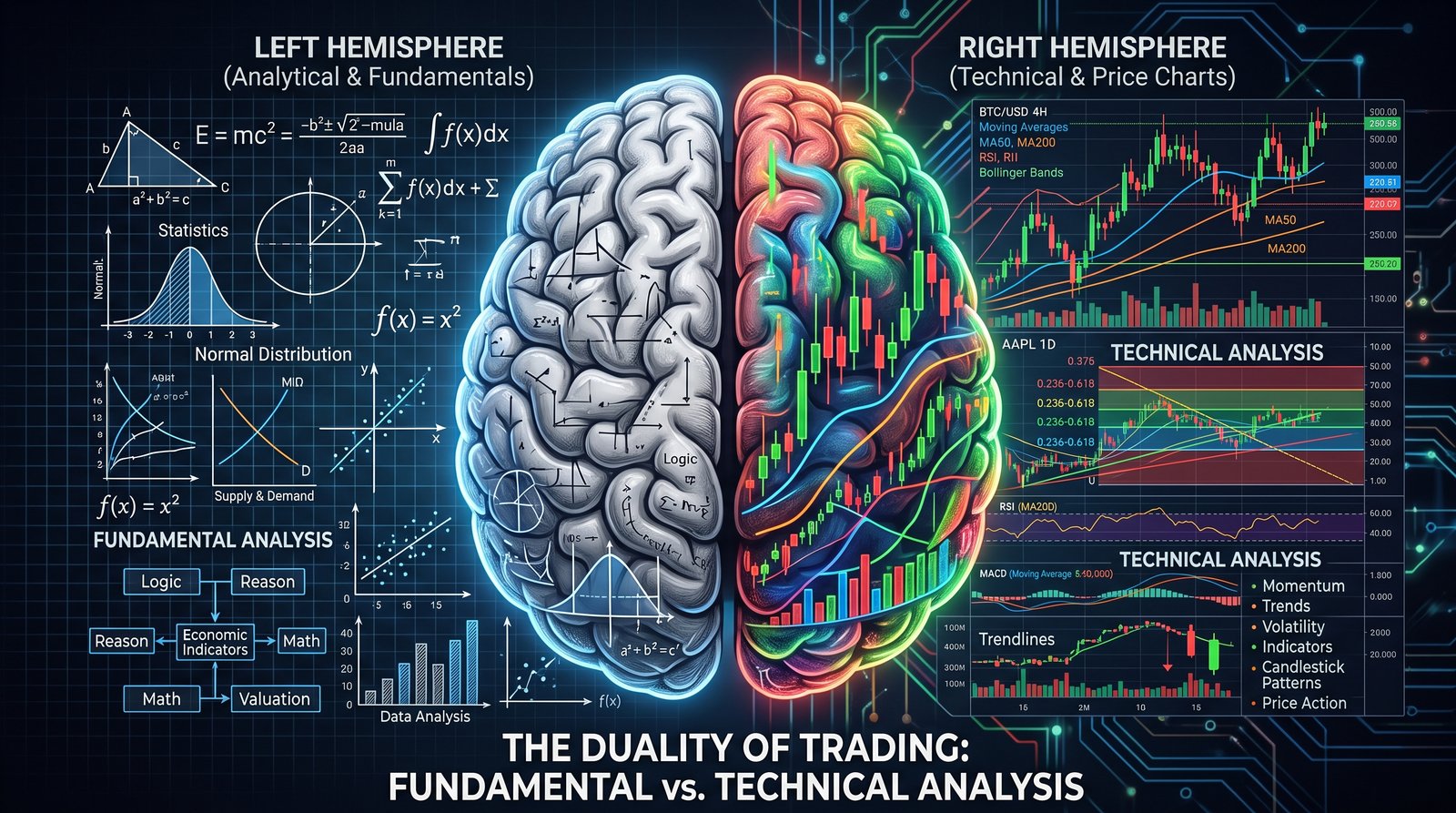
Fundamental analysis and technical analysis represent two distinct approaches to evaluating cryptocurrency investments. Each method has its strengths and limitations, and understanding when to use each — and how to combine them — is essential for making informed investment decisions. This guide provides a comprehensive comparison of both approaches and a framework for integrating them into your investment process.
Understanding Fundamental Analysis
Fundamental analysis in cryptocurrency involves evaluating the intrinsic value of a project by examining its underlying characteristics. This includes analyzing the team, technology, tokenomics, market positioning, competitive advantages, and growth potential. The goal is to determine whether a project is undervalued or overvalued relative to its true worth.
In traditional finance, fundamental analysis uses metrics like price-to-earnings ratios, revenue growth, profit margins, and balance sheet strength. For cryptocurrencies, fundamental analysis has adapted to include metrics like network revenue, total value locked, developer activity, user growth, and tokenomics sustainability. The underlying principle is the same — understand the asset's fundamental value and invest when market price diverges favorably from that value.
Key Fundamental Analysis Metrics
On-Chain Metrics
On-chain data provides objective measures of network health and usage. Active addresses, transaction volume, total value locked, and network revenue all indicate whether a project is gaining or losing traction. Growing on-chain activity supports a positive fundamental thesis.
Tokenomics
Tokenomics analysis examines supply schedules, inflation rates, token distribution, vesting periods, and utility mechanisms. Projects with sustainable tokenomics that align incentives between all participants are fundamentally stronger than those with poorly designed economic models.
Development Activity
GitHub commit frequency, number of active developers, and quality of code contributions provide insight into the project's technical health. Active, consistent development indicates a committed team making progress on the roadmap.
Understanding Technical Analysis
Technical analysis studies historical price and volume data to identify patterns and trends that may predict future price movements. It is based on the premise that market psychology repeats over time and that price movements are not random but follow identifiable patterns.
Technical analysis does not attempt to determine the intrinsic value of an asset. Instead, it focuses exclusively on price action, using charts, indicators, and patterns to identify trading opportunities. Technical analysis is particularly popular in cryptocurrency trading due to the high volatility and strong trending characteristics of digital assets.
Key Technical Analysis Tools
Trend Analysis
Identifying the direction and strength of trends is the foundation of technical analysis. Trends can be up, down, or sideways. Trading in the direction of the prevailing trend improves probability of success. Trend lines, moving averages, and the ADX indicator help identify and measure trends.
Support and Resistance
Support and resistance levels identify price points where buying or selling pressure is expected to emerge. These levels form the basis for entry and exit decisions in most technical trading strategies.
Indicators and Oscillators
Technical indicators like RSI, MACD, and Bollinger Bands provide additional information about momentum, volatility, and potential reversal points. These tools help traders time their entries and exits with greater precision.
When to Use Fundamental Analysis
Fundamental analysis is most useful for making long-term investment decisions. If you are considering holding a cryptocurrency for months or years, understanding the project's fundamentals is essential. Fundamental analysis helps you identify projects with strong long-term potential and avoid those with weak foundations, regardless of short-term price movements.
Fundamental analysis is also critical for portfolio construction. Deciding how much to allocate to Bitcoin versus Ethereum versus altcoins should be based on fundamental analysis of each asset's risk-return profile, growth potential, and correlation characteristics. Fundamental analysis provides the foundation for strategic asset allocation decisions.
When to Use Technical Analysis
Technical analysis is most useful for timing entry and exit points. Even if you have identified a fundamentally strong project, technical analysis helps you determine when to buy. Buying during oversold conditions, at support levels, or when momentum indicators turn positive improves your entry price and potential returns.
Technical analysis is also essential for active trading strategies. Day traders and swing traders rely heavily on technical analysis because they need to make frequent decisions based on short-term price movements. For these trading styles, technical analysis is the primary analytical tool.
Combining Both Approaches
The most successful investors combine fundamental and technical analysis. Fundamental analysis provides the what to buy, while technical analysis provides the when to buy. Using both approaches creates a more complete investment framework than relying on either one alone.
A typical combined approach starts with fundamental analysis to identify a universe of high-quality projects with strong long-term potential. Technical analysis is then applied to determine optimal entry points for those projects. When fundamental analysis indicates a project is undervalued and technical analysis confirms bullish conditions, the confluence of signals creates a high-probability opportunity. Similarly, when fundamental analysis suggests a project is overvalued and technical analysis shows bearish patterns, it may be time to reduce exposure or exit entirely.
Limitations of Each Approach
Fundamental analysis in crypto has significant limitations. Valuing cryptocurrencies is inherently difficult because most projects do not generate traditional cash flows. The technology and competitive landscape evolve rapidly, making long-term predictions unreliable. Market sentiment and speculation can drive prices far from fundamental values for extended periods.
Technical analysis also has limitations. Patterns and signals can be subjective, and different analysts may interpret the same chart differently. Technical analysis can produce false signals, especially in low-liquidity or manipulated markets. Technical analysis does not account for fundamental events like regulatory changes or protocol upgrades that can fundamentally alter a project's prospects.
Developing Your Analytical Framework
Rather than choosing between fundamental and technical analysis, develop a framework that incorporates both. Your specific approach should depend on your investment style, time horizon, and risk tolerance. Long-term investors should weight fundamental analysis more heavily. Active traders should weight technical analysis more heavily.
Regardless of your weighting, establish clear criteria for both fundamental and technical analysis. Document your process and track your decisions. Over time, refine your framework based on what works and what does not. The investors who succeed are not those who use the most sophisticated analysis but those who have a systematic approach and follow it consistently.
Conclusion
Fundamental analysis and technical analysis are complementary tools, not competing methodologies. Fundamental analysis helps you identify what to buy by evaluating the intrinsic value and long-term potential of cryptocurrency projects. Technical analysis helps you determine when to buy by identifying favorable entry and exit points based on price patterns and market dynamics.
The most successful investors integrate both approaches into a unified framework. Use fundamental analysis to build your investment universe and make strategic allocation decisions. Use technical analysis to time your entries and exits and manage short-term risk. By combining the strengths of both approaches, you can make more informed decisions and achieve better investment results.