Crypto Trading Psychology for Consistent Results
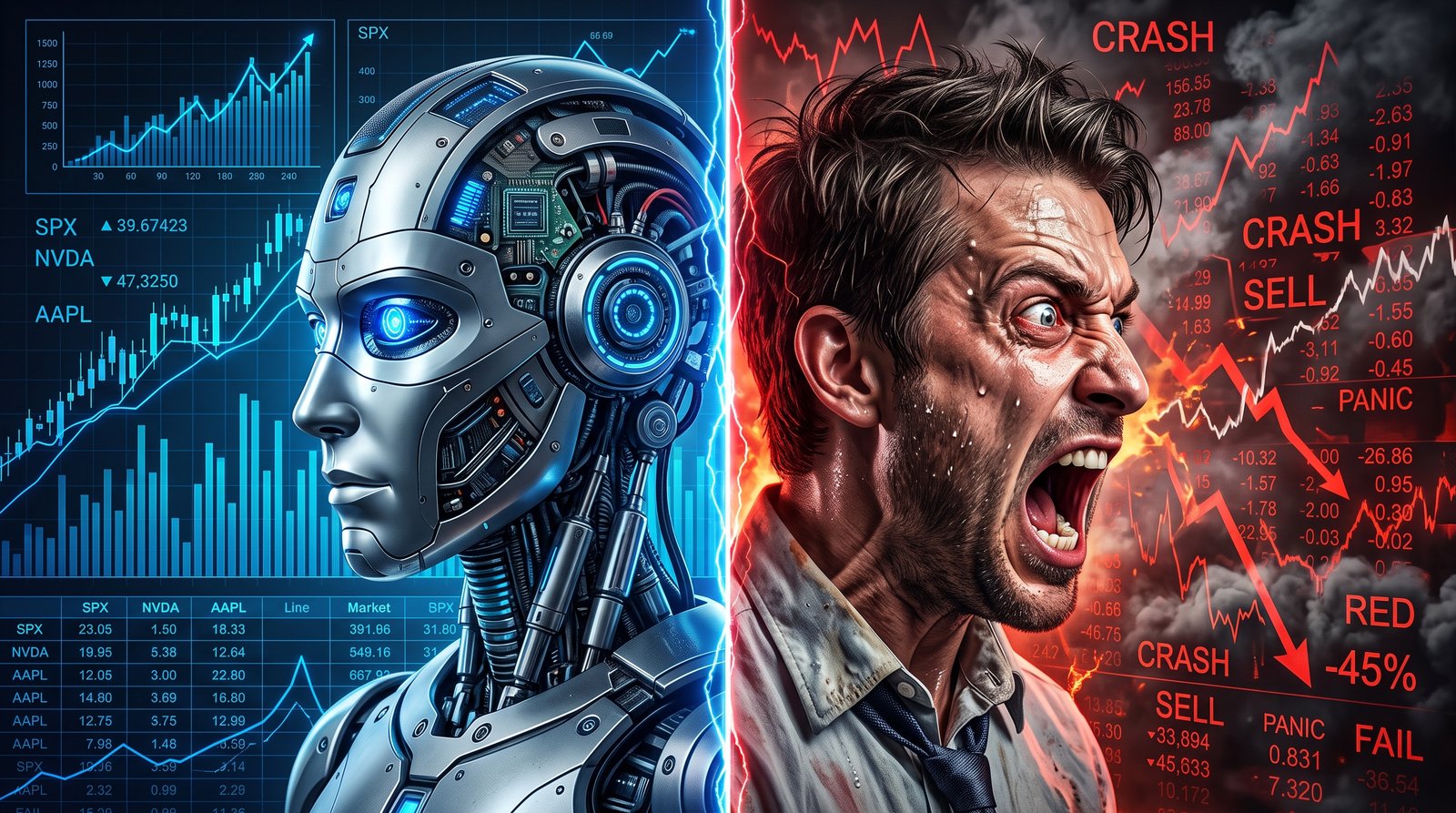
Trading psychology is often the difference between consistent profitability and repeated failure. Many traders spend months or years perfecting their technical analysis while neglecting the psychological aspects of trading. Yet experienced professionals consistently report that psychology — not strategy — is the primary factor determining long-term trading success. This comprehensive guide explores the psychological challenges of crypto trading and provides practical techniques for developing the mental discipline required for consistent results.
Why Psychology Matters in Trading
The human brain is not wired for trading. Evolution has programmed us to seek immediate rewards, avoid losses at all costs, and follow the crowd — all tendencies that lead to poor trading decisions. The modern financial markets, with their instant feedback loops and extreme emotional triggers, exploit these evolutionary biases mercilessly.
Every trade involves uncertainty, and uncertainty triggers emotional responses. Fear causes traders to exit winning trades too early or avoid taking valid setups. Greed causes traders to hold losing positions hoping for reversals or to take excessive risks. Hope leads traders to ignore warning signs. Regret leads to revenge trading. These emotional responses are natural, but they must be managed for trading success.
The Most Dangerous Emotions in Trading
Fear
Fear manifests in several ways in trading. Fear of missing out causes traders to enter positions late, often at market tops. Fear of losing causes traders to set stop-losses too tight, resulting in being stopped out of trades that would have been winners. Fear of being wrong causes traders to hold losing positions, hoping for reversals that rarely come.
Fear is particularly intense in crypto markets due to their extreme volatility. A ten percent move against your position in crypto is normal but would be catastrophic in traditional markets. Managing fear requires preparation, discipline, and a systematic approach to risk management that removes emotional decision-making.
Greed
Greed drives traders to take excessive risks, use too much leverage, and hold winning positions too long hoping for even larger gains. Greed is most dangerous during bull markets when rising prices create a false sense of invincibility. Traders who were previously disciplined abandon their rules as they see others making quick profits.
The solution to greed is having clear profit targets and sticking to them. Define your RR ratio before entering a trade and honor it. Take profits at your targets regardless of whether the market continues without you. There will always be another trade. Protecting your profits is as important as protecting your capital.
Hope
Hope is perhaps the most destructive emotion in trading. Hope causes traders to hold losing positions long after their stop-loss should have been triggered. Hope leads traders to average down into losing positions, increasing risk in the mistaken belief that the market must eventually turn. Hope is the refusal to accept reality.
Hope must be replaced with acceptance. Accept that losses are part of trading. Accept that the market does not care about your position or your opinion. Accept that you will be wrong frequently. Once you truly accept these facts, you can focus on what you can control — your risk management, your strategy execution, and your emotional discipline.
Cognitive Biases in Trading
Confirmation Bias
Confirmation bias is the tendency to seek out information that confirms our existing beliefs while ignoring contradictory evidence. In trading, this means focusing on indicators and analysis that support our position while dismissing warning signs. This bias leads traders to hold losing positions longer than they should and miss opportunities to exit at reasonable losses.
Combat confirmation bias by actively seeking evidence that your trade might be wrong. Before entering a trade, list the conditions that would invalidate your thesis. If those conditions occur, exit immediately regardless of your opinion about the trade.
Recency Bias
Recency bias is the tendency to give more weight to recent events than to historical patterns. After a losing trade, traders become overly cautious and miss valid setups. After a winning trade, traders become overconfident and take excessive risks. This bias causes traders to deviate from their strategy based on recent outcomes.
Maintain a long-term perspective by tracking your performance over many trades rather than focusing on individual results. Review your trading journal regularly to see the big picture. Remember that a few losing trades do not invalidate a profitable strategy, and a few winning trades do not make you a genius.
Loss Aversion
Loss aversion is the tendency to feel the pain of losses more intensely than the pleasure of equivalent gains. Research shows that the pain of losing one hundred dollars is roughly twice as intense as the pleasure of gaining one hundred dollars. This asymmetry causes traders to take excessive risks to avoid losses and to exit winning trades too early to lock in gains.
The solution is to focus on process rather than outcomes. Judge your trading by whether you followed your rules, not by whether individual trades were profitable. Develop a healthy relationship with losses by accepting them as a normal business expense. A well-managed loss is a successful trade execution.
Developing Trading Discipline
Discipline is the ability to follow your trading plan regardless of your emotional state. It is the most important quality for trading success. Discipline allows you to take trades when you are fearful and to refrain from trading when you are eager. Discipline transforms a good strategy into consistent profits.
Developing discipline requires practice and self-awareness. Start by creating a detailed trading plan and committing to following it perfectly for a set period — even if it means missing profitable opportunities that fall outside your plan. Gradually, following your rules becomes a habit that requires less conscious effort. Discipline is not about suppressing emotions but about having a system that guides your actions despite your emotions.
Building Patience
Patience is the ability to wait for high-probability setups and to let winning trades develop. In a market that operates twenty-four hours a day, there is always a temptation to trade. The most successful traders trade less frequently than beginners because they wait for their specific conditions to align.
Cultivate patience by focusing on quality over quantity. Track your performance based on average trade profitability rather than number of trades. Remind yourself that waiting is an active decision — you are choosing not to trade until conditions are favorable. The market will always offer opportunities tomorrow. Patience allows you to capture the best ones today.
Managing Trading Stress
Trading is inherently stressful. The financial stakes, the uncertainty, and the constant decision-making create significant psychological pressure. Chronic stress impairs decision-making, reduces focus, and leads to burnout. Managing stress is essential for long-term trading success.
Develop a pre-trading routine that prepares you mentally for the session. This might include meditation, exercise, reviewing your trading plan, or simply taking a few deep breaths before your first trade of the day. Take regular breaks during trading sessions. Maintain a healthy lifestyle with adequate sleep, exercise, and proper nutrition. Trading performance is directly linked to physical and mental health.
The Role of a Trading Journal
A trading journal is not just for tracking performance metrics — it is a powerful tool for psychological development. Record your emotional state for each trade. Note what you were feeling when you entered, when the trade moved against you, and when you exited. Over time, patterns will emerge that reveal your psychological strengths and weaknesses.
Use your journal to identify your most productive mental states and learn to reproduce them. Identify the situations that trigger emotional responses and develop strategies for managing those situations. A journal transforms subjective psychological experiences into objective data that can be analyzed and improved.
Developing a Growth Mindset
A growth mindset is the belief that abilities can be developed through dedication and hard work. In trading, this means viewing every trade — profitable or not — as a learning opportunity. Traders with a growth mindset recover from losses quickly and continuously improve their skills.
Contrast this with a fixed mindset, where traders attribute outcomes to innate talent or luck. Fixed mindset traders become defensive after losses and fail to learn from mistakes. Cultivate a growth mindset by celebrating effort and process rather than outcomes. Ask yourself after every trade what you learned, regardless of whether it was profitable.
Conclusion
Trading psychology is the foundation upon which successful trading is built. Technical analysis provides the framework for identifying opportunities, but psychological discipline determines whether you can execute on those opportunities consistently. Master your emotions, understand your biases, and develop the mental skills required for long-term trading success.
Treat trading psychology as a skill that requires deliberate practice, just like any technical skill. Study it, journal about it, and actively work on improving it. The traders who achieve consistent results are not those who never experience fear or greed — they are those who have learned to manage these emotions effectively. Invest in your psychological development as heavily as you invest in your technical education, and you will be well on your way to consistent trading results.