Emerging Cryptocurrency Trends to Watch in 2026
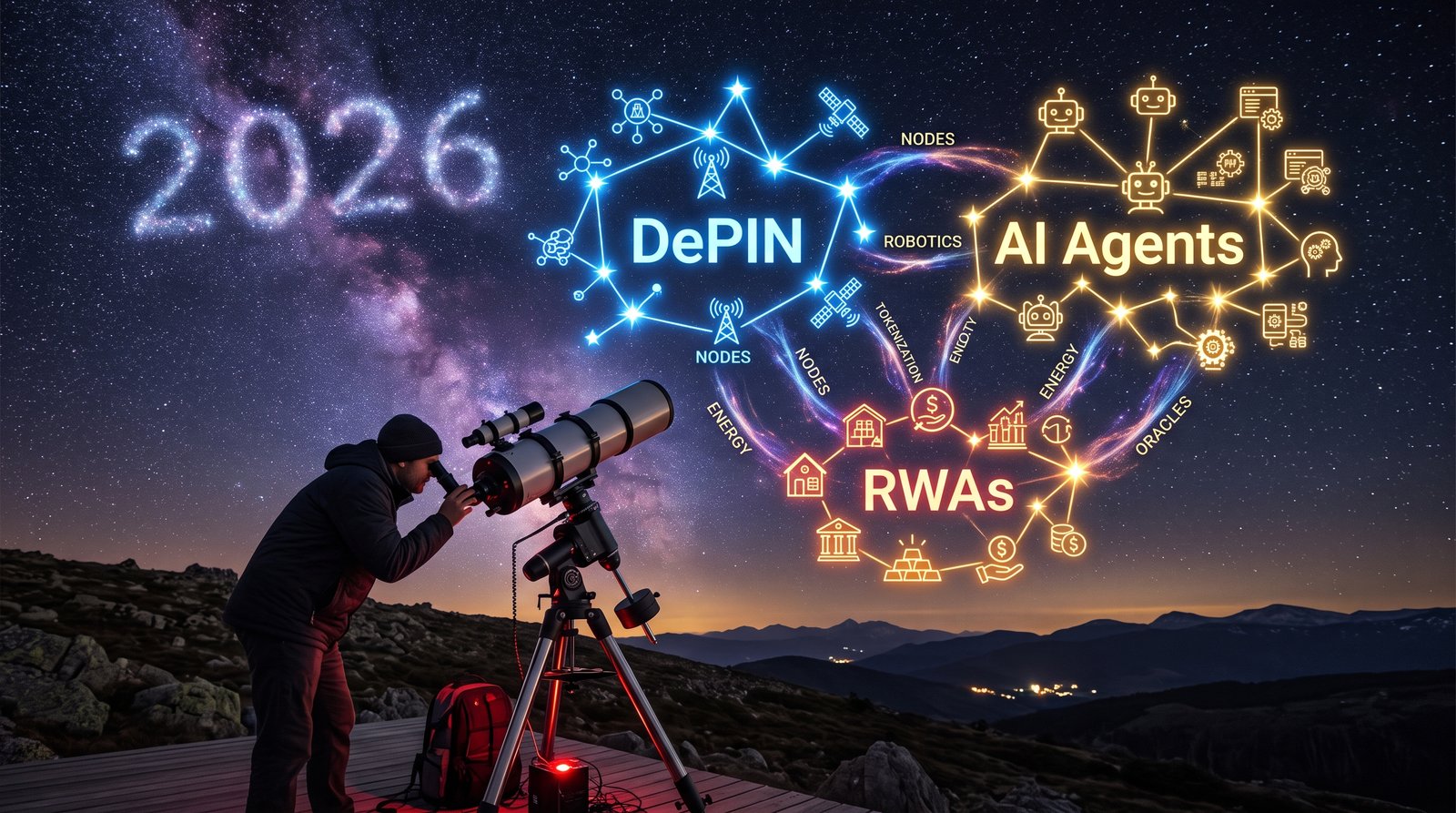
The cryptocurrency landscape in 2026 is markedly different from the boom-and-bust cycles of previous years. The market has matured, institutional participation has deepened, and the technology has advanced on multiple fronts simultaneously. This comprehensive analysis identifies the key trends shaping the crypto ecosystem in 2026 and provides actionable insights for investors looking to navigate the evolving landscape.
1. Institutional Adoption Reaches Critical Mass
The most significant structural shift in crypto markets has been the mainstreaming of institutional participation. The approval of spot Bitcoin ETFs in the US and Hong Kong in 2024 opened the floodgates for institutional capital. By mid-2026, over $100 billion has flowed into spot Bitcoin ETFs globally, with similar products for Ethereum attracting $40 billion-plus. Major asset managers including BlackRock, Fidelity, and Invesco now offer crypto exposure through traditional investment vehicles.
Beyond ETFs, institutional adoption extends to corporate treasuries (with over 50 publicly traded companies holding Bitcoin on their balance sheets), pension funds (several US and European pension funds have allocated 1-3% to crypto), and endowments (Harvard, Yale, and Stanford have increased crypto exposure through their endowment funds). This institutional involvement has reduced volatility relative to previous cycles and provided a more stable demand base.
2. Real-World Asset Tokenization Accelerates
Tokenization of real-world assets (RWA) has emerged as the defining narrative of 2025-2026. The concept of representing traditional assets — Treasury bills, bonds, real estate, commodities, and private credit — on blockchain networks has moved from experimentation to production deployment at scale.
BlackRock's BUIDL fund, launched in March 2024, has grown to over $2 billion in tokenized Treasury holdings. Other major players including Franklin Templeton, WisdomTree, and Ondo Finance have launched competing products. The total value of tokenized real-world assets has exceeded $15 billion, with projections suggesting exponential growth as the infrastructure matures.
For investors, RWA tokenization offers several advantages: fractional ownership of previously inaccessible assets, 24/7 markets, faster settlement, and programmatic compliance through smart contracts. The tokenization of private credit — a $1.7 trillion market — is particularly significant, as it provides yield opportunities that were previously available only to institutional investors.
3. Layer-2 Ecosystem Matures and Fragments
The Layer-2 ecosystem has evolved dramatically, with hundreds of L2s now operating across Ethereum and other base layers. The landscape has shifted from a handful of dominant players to a diverse ecosystem of general-purpose L2s, application-specific chains, and L3s (Layer-3s built on top of L2s).
Key developments include: the rise of the Superchain concept (a network of interoperable OP Stack chains including Optimism, Base, and Worldchain); ZK-rollups achieving EVM equivalence and attracting significant ecosystem growth; and the emergence of Bitcoin L2s through BitVM, Taproot Assets, and RGB that bring smart contract-like functionality to Bitcoin.
The fragmentation challenge persists, but interoperability solutions are maturing. Chainlink's CCIP, LayerZero's OFT standard, and Across Protocol provide increasingly seamless cross-L2 asset movement. The end state is likely a multi-chain world where users rarely need to think about which chain they are using.
4. AI x Crypto Convergence Deepens
The intersection of artificial intelligence and cryptocurrency has moved from theoretical to practical. The tokenization of GPU compute through networks like Render and Akash creates decentralized alternatives to AWS and Google Cloud for AI workloads. AI agents operating on blockchain networks automate increasingly complex tasks in DeFi, supply chain, and digital identity.
Perhaps most significantly, the need for verifiable AI — the ability to prove that an AI model was trained correctly and produced a specific output — is driving adoption of ZK-proofs for machine learning (zkML). This technology enables trustless AI inference, meaning users can verify that an AI model's output is correct without revealing the model's parameters or the input data.
5. DePIN: Decentralized Physical Infrastructure Networks
DePIN — decentralized networks that coordinate physical infrastructure through token incentives — has grown into a major sector. These networks incentivize individuals to deploy real-world hardware — wireless hotspots, sensors, electric vehicle chargers, solar panels, and storage devices — in exchange for token rewards.
Helium, the pioneering DePIN project, has deployed over 1 million hotspots globally and expanded from IoT to 5G cellular networks. Hivemapper has built a decentralized street-mapping network with over 40 million unique kilometers mapped, competing with Google Street View through contributor incentives. Filecoin and Arweave provide decentralized storage infrastructure that rivals centralized cloud providers.
DePIN represents a fundamentally new model for building physical infrastructure — one where capital expenditure is distributed across thousands of participants rather than concentrated in a single entity. The market for DePIN tokens has grown to over $30 billion in combined market capitalization.
6. Regulatory Clarity Drives Market Maturation
The regulatory landscape in 2026 provides significantly more clarity than in previous years. MiCA's full implementation in Europe creates a comprehensive framework that other jurisdictions are studying. The US has made progress toward comprehensive crypto legislation through the FIT21 Act and stablecoin-specific bills. Singapore, Hong Kong, and the UAE have established themselves as clear regulatory leaders.
This regulatory maturation has several effects: it reduces systemic risk by eliminating unregulated actors, enables traditional financial institutions to participate more fully, and provides a framework for resolving disputes and protecting investors. However, it also increases compliance costs and reduces some of the permissionless innovation that characterized earlier crypto markets.
7. Account Abstraction and UX Revolution
Ethereum's ERC-4337 account abstraction standard has begun transforming the user experience for crypto applications. Smart contract wallets now support social recovery (eliminating the seed phrase problem), gas sponsorship (allowing applications to pay user fees), batched transactions (multiple operations in one click), and session keys (enabling automated interactions without repeated approvals).
These improvements are critical for mainstream adoption. The complexity of managing private keys, understanding gas fees, and navigating transaction confirmations has been the single largest barrier to non-technical users entering crypto. Account abstraction removes these barriers while maintaining the security and self-custody benefits of blockchain.
Market Data and Metrics (Mid-2026)
| Trend | Market Size | Growth Rate (YoY) | Key Projects |
|---|---|---|---|
| Spot Crypto ETFs | $140B AUM | +200% | BlackRock, Fidelity, Grayscale |
| RWA Tokenization | $15B TVL | +150% | BlackRock BUIDL, Ondo, Maker |
| Layer-2 TVL | $35B | +80% | Arbitrum, Base, Optimism |
| AI x Crypto | $25B Market Cap | +120% | Render, Bittensor, Fetch.ai |
| DePIN | $30B Market Cap | +90% | Helium, Hivemapper, Filecoin |
| Stablecoins | $155B Supply | +22% | USDT, USDC, DAI |
Risks and Challenges to Watch
Geopolitical Risks
Crypto markets are increasingly correlated with macroeconomic conditions. Geopolitical tensions, trade disputes, and monetary policy decisions in major economies continue to impact crypto prices. The US election cycle, potential regulatory shifts, and international coordination (or lack thereof) on crypto policy create ongoing uncertainty.
Security and Infrastructure Risks
Despite improvements, security remains a concern. Bridge exploits, smart contract vulnerabilities, and phishing attacks continue to cause losses. The increasing complexity of multi-chain infrastructure creates new attack surfaces that need to be secured. Insurance products for DeFi are maturing but remain limited in coverage and capacity.
Valuation and Speculation
While institutional adoption has provided a more stable demand base, crypto markets remain volatile and prone to speculative excess. Meme coins and speculative tokens continue to attract retail traders, and the correlation between narratives and prices remains strong. Investors should maintain disciplined risk management regardless of the market cycle.
Frequently Asked Questions About Crypto Trends in 2026
What is the biggest trend in crypto right now?
Real-world asset tokenization is the dominant narrative of 2025-2026, with over $15 billion in tokenized assets and major institutions like BlackRock driving adoption. The convergence of AI and crypto is the emerging trend with the highest growth potential.
Is it too late to invest in crypto in 2026?
No. While Bitcoin and Ethereum have matured as assets, the crypto ecosystem continues to expand into new sectors including RWAs, DePIN, and AI. The total addressable market for blockchain technology remains vast, and many sub-sectors are still in their early stages of development.
Which crypto sectors have the most growth potential?
RWA tokenization, AI x Crypto, DePIN, and Bitcoin Layer-2 solutions are the sectors with the most significant growth potential. Each addresses large addressable markets and has demonstrated genuine product-market fit with real users and revenue.
How should I position my portfolio for 2026-2027?
A balanced approach is recommended: core holdings in Bitcoin and Ethereum, selective exposure to high-conviction sectors (RWAs, AI, DePIN), and a portion allocated to liquid yield opportunities through DeFi. Maintain strict position sizing and regular rebalancing to manage volatility.
Conclusion: Navigating the Maturing Crypto Landscape
The cryptocurrency ecosystem in 2026 is fundamentally more mature, more institutional, and more integrated with the traditional financial system than at any point in its history. The speculative excesses of previous cycles have given way to genuine utility, institutional infrastructure, and regulatory frameworks that provide a foundation for sustainable growth.
For investors, the key to success in this environment is disciplined research, strategic diversification, and patient capital allocation. The trends outlined in this analysis — institutional adoption, RWA tokenization, L2 maturation, AI convergence, DePIN, and regulatory clarity — represent structural shifts that will shape the crypto landscape for years to come. Understanding these trends and positioning accordingly is the most reliable path to capturing value in the next phase of the cryptocurrency revolution.